Topics

Annuities
0 of 0 exercises completed
An annuity as the reverse of a loan, with regular end-of-period withdrawals or payments and TVM Solver calculations using PV, PMT, FV, N, I%, and correct positive/negative cash-flow signs.
Want a deeper conceptual understanding? Try our interactive lesson!
Definition of an annuity
SL AI 1.7
An annuity is a type of account that a person can live off when they retire. They make regular withdrawals, and the interest on the account allows the money to last longer. The money in an annuity account is often built up over a lifetime of saving and compounding, but it can also be deposited in a lump-sum.
Effectively, an annuity is the reverse of a loan. Instead of the bank lending you money, you lend the bank money, and they make regular repayments back to you over time.
Take a look at the graphic below to see what a full financial future might look like: with consistent saving, retirement, and an annuity account that pays out until some set age.
Using TVM Solver (Calculator) - Annuities
SL Core 1.4
You should be able to use the TVM Solver on your calculator to perform calculations with annuities.
In IB, annuities are paid at the end of a number of periods (N) and have an annual interest rate (I%), an initial lump-sum deposit (PV), a fixed payment (PMT) and a future value (FV), which represents the total accumulated amount at the end of the term.
In the special case of annuities, payments and compounding occur can occur at different same frequencies (P/Y & C/Y).
Positive & Negative Cash Flows (TVM)
SL Core 1.4
Whenever you use the Finance App (TVM Solver) on your calculator, it's critical that you enter and interpret the signs correctly:
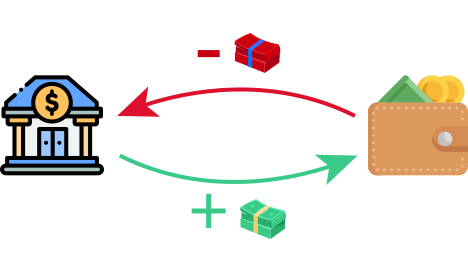
When you receive money from a bank or savings account, that value is positive, because you're gaining money.
When you send money to a bank, that value is negative, because you're losing money.
Nice work completing Annuities, here's a quick recap of what we covered:
Skills covered
Exercises checked off
I'm Plex, here to help you understand this concept!